
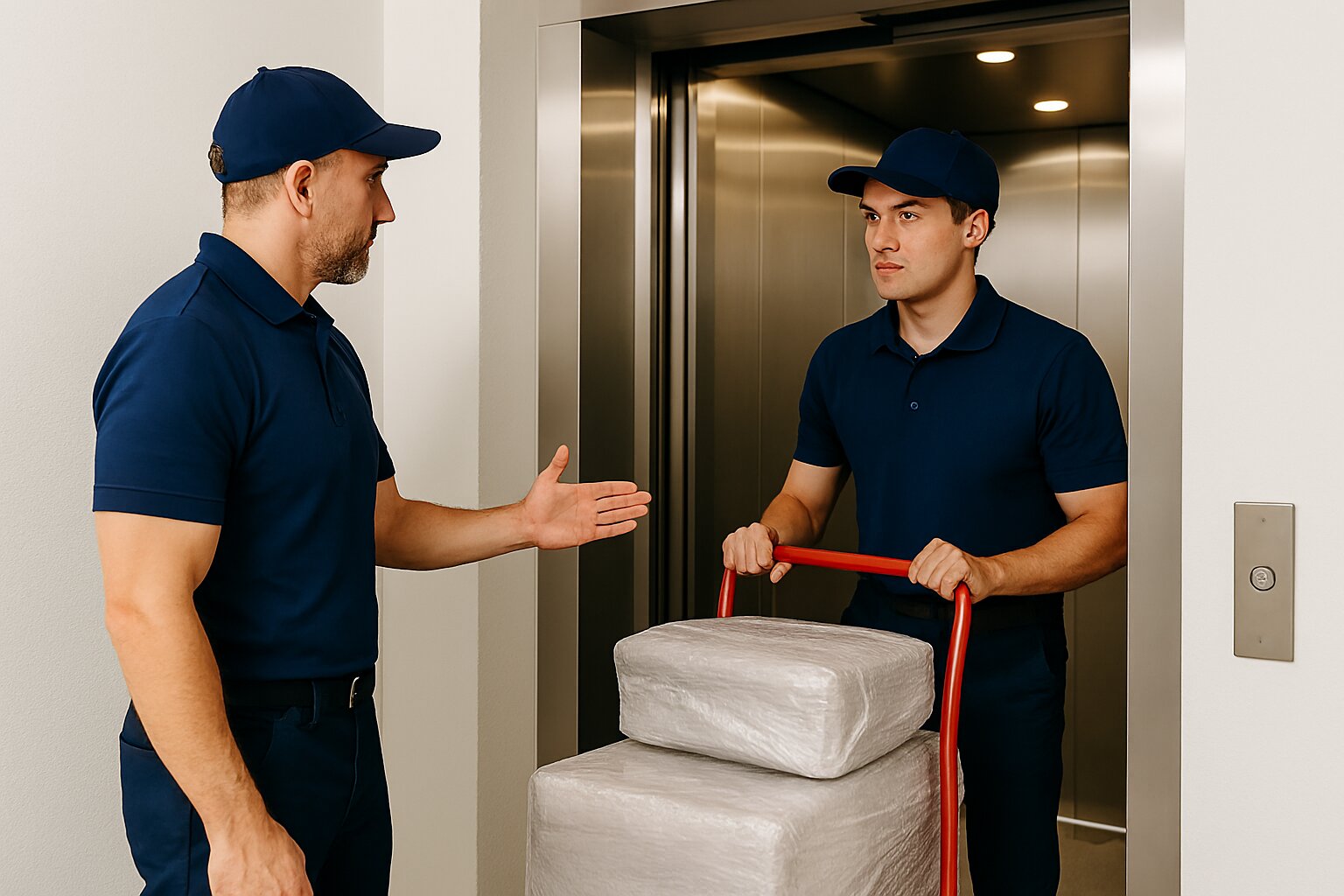
Moving into an apartment or office block involves more than just packing boxes and hiring a truck. In Australia, if you are moving in or out of a multi-story building, you likely need a lift booking.
Many tenants and owners overlook this logistical step until the last minute. Failing to secure a lift booking can lead to delayed moves, financial penalties, or your best movers being turned away at the door.
In this guide, we break down what a lift booking is, why strata managers enforce it, and how to coordinate it properly.
What Exactly Is a Lift Booking?
A lift booking is a formal reservation made with your building management or Body Corporate to secure the use of an elevator for a specific time window.
It is not simply notifying the building that you are moving. It is an approved operational procedure that typically involves:
- Exclusive or Priority Access: The lift is often keyed to "service mode" (independent service), allowing you to hold the doors open and bypass other floors without the lift being called away by other residents.
- Protection: Building management installs lift curtains (padded protective blankets) to cover the interior walls and mirrors.
- Designated Time Slots: You are given a strict window (e.g., 9:00 AM – 12:00 PM) to complete your load-in or load-out.
Note: In buildings with a dedicated goods lift or service lift, the booking reserves that specific elevator. In smaller buildings with only passenger lifts, a booking reserves one of the standard lifts for your dedicated use.
Why Do Buildings Require Lift Bookings?
You might think you can just "use the lift when it's free." In most Australian strata-managed buildings, this is strictly prohibited. Building managers enforce bookings for three main reasons:
1. Damage Prevention
Moving furniture involves heavy items, sharp corners, and trolleys. Without protective padding (lift curtains), it is easy to scratch stainless steel doors, crack mirrors, or dent panels.
- The Reality: Strata bylaws usually hold the resident liable for damage to common property. A lift booking ensures protections are installed before you start.
2. Traffic Management
Imagine two residents trying to move in on the same Saturday morning while other residents try to get to the lobby. It creates chaos.
- The Logistics: By allocating time slots, management prevents congestion and ensures the lift isn't monopolized during peak hours.
3. Liability and Compliance
Building management needs to know who is on-site. They often require proof of insurance from your removalist before authorizing the move.
Service Lifts vs. Passenger Lifts
It is vital to understand which lift you are authorized to use.
- Service/Goods Lifts: These are taller, deeper, and designed for heavy loads. They often open directly onto a loading dock. If your building has one, you must use it.
- Passenger Lifts: These are for people. In many buildings, taking furniture through a polished passenger foyer is banned.
Crucial: If you attempt to jam a sofa into a passenger lift without approval, the building manager has the authority to stop your move immediately.
How to Arrange a Lift Booking
Do not assume your removalist will do this for you. While removalists handle the physical move, the booking responsibility belongs to the resident.
Follow this standard process:
1. Contact Building Management Early
As soon as you have a move date, contact your Building Manager or Strata Committee. In high-density areas like Sydney or Melbourne, lift slots can book out weeks in advance.
2. Confirm the Regulations
Ask the following questions specifically:
- Are there restricted hours? (e.g., "No moves on Sundays" or "9 AM to 4 PM only").
- Is there a refundable bond required?
- What are the height and depth dimensions of the lift?
3. Secure Removalist Documents
Most buildings require a Certificate of Currency (Public Liability Insurance) from your removalist.
- Action: Request this from your removalist immediately and forward it to building management. Without this paper, your booking will not be approved.
4. Lock in the Time Slot
Once approved, confirm the time slot with your removalist. Ensure your removalist arrives at the start of the window. If you book the lift from 9:00 AM to 11:00 AM and the truck arrives at 10:30 AM, you will not be allowed to extend your time.
Common Misconceptions
Let’s clear up the confusion regarding what is technically possible versus what is allowed.
Misconception: "I don't have much stuff, so I don't need a booking."
Reality: Even small moves involve trolleys and repeated trips. If you are holding the lift door open, you are disrupting the building's operation. Strata rules apply regardless of the volume of goods.
Misconception: "The removalist handles the booking."
Reality: Removalists cannot book the lift for you because they are not the tenant or owner. They can provide insurance details, but the application must come from you.
Misconception: "I can just do it on the weekend."
Reality: Many high-end residential buildings ban moving on weekends entirely to preserve peace for residents. Always check the bylaws.
Summary Checklist
If you are moving into an apartment complex, treat the lift booking as high priority.
- Check: Contact Strata immediately to find out the rules.
- Book: Reserve the service lift for a specific date and time.
- Insure: Send your removalist’s insurance certificate to management.
- Measure: Ensure your furniture fits the lift dimensions provided.
Pro Tip: On moving day, introduce your removalist lead to the Building Manager. This establishes a professional rapport and ensures the manager knows the team will respect the property.
By securing a lift booking, you ensure your removalists have the access they need to complete your move efficiently, without friction from neighbors or management.